Garden design & maintenance — Ludlow, Shropshire
Ash & Alder
One border, twice: high July on the left, hard January on the right. We plant for both.
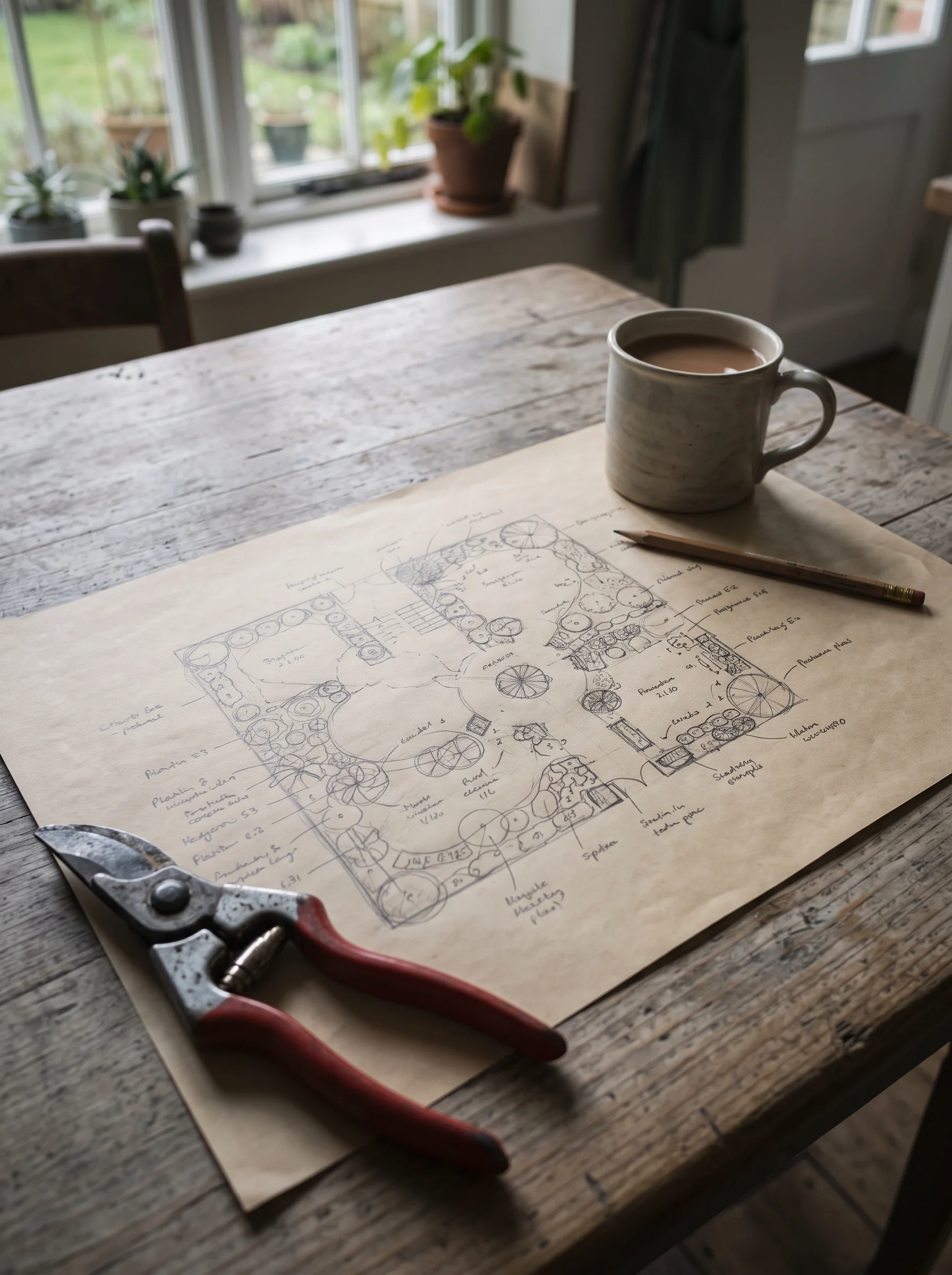
Begin with a plan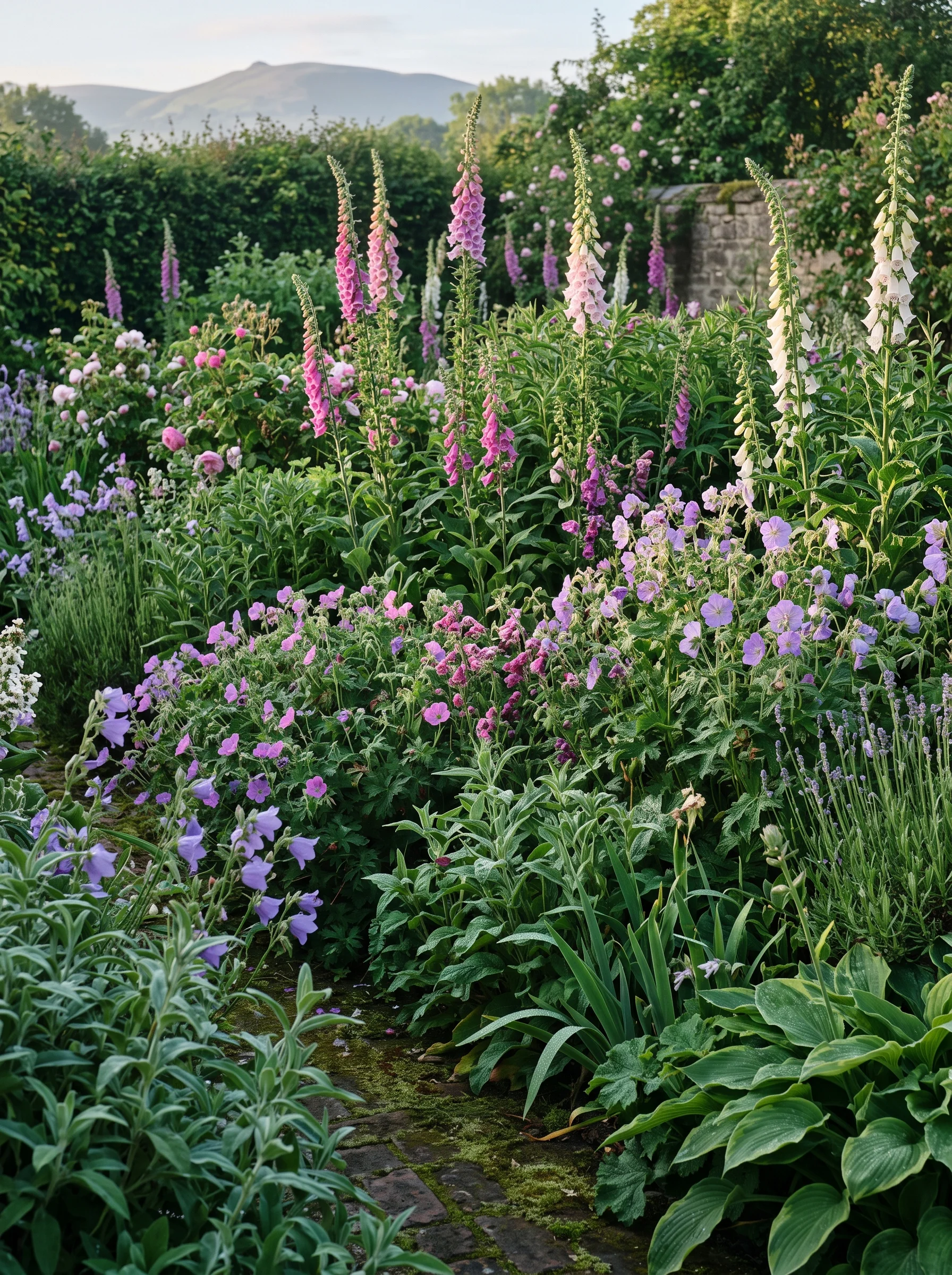
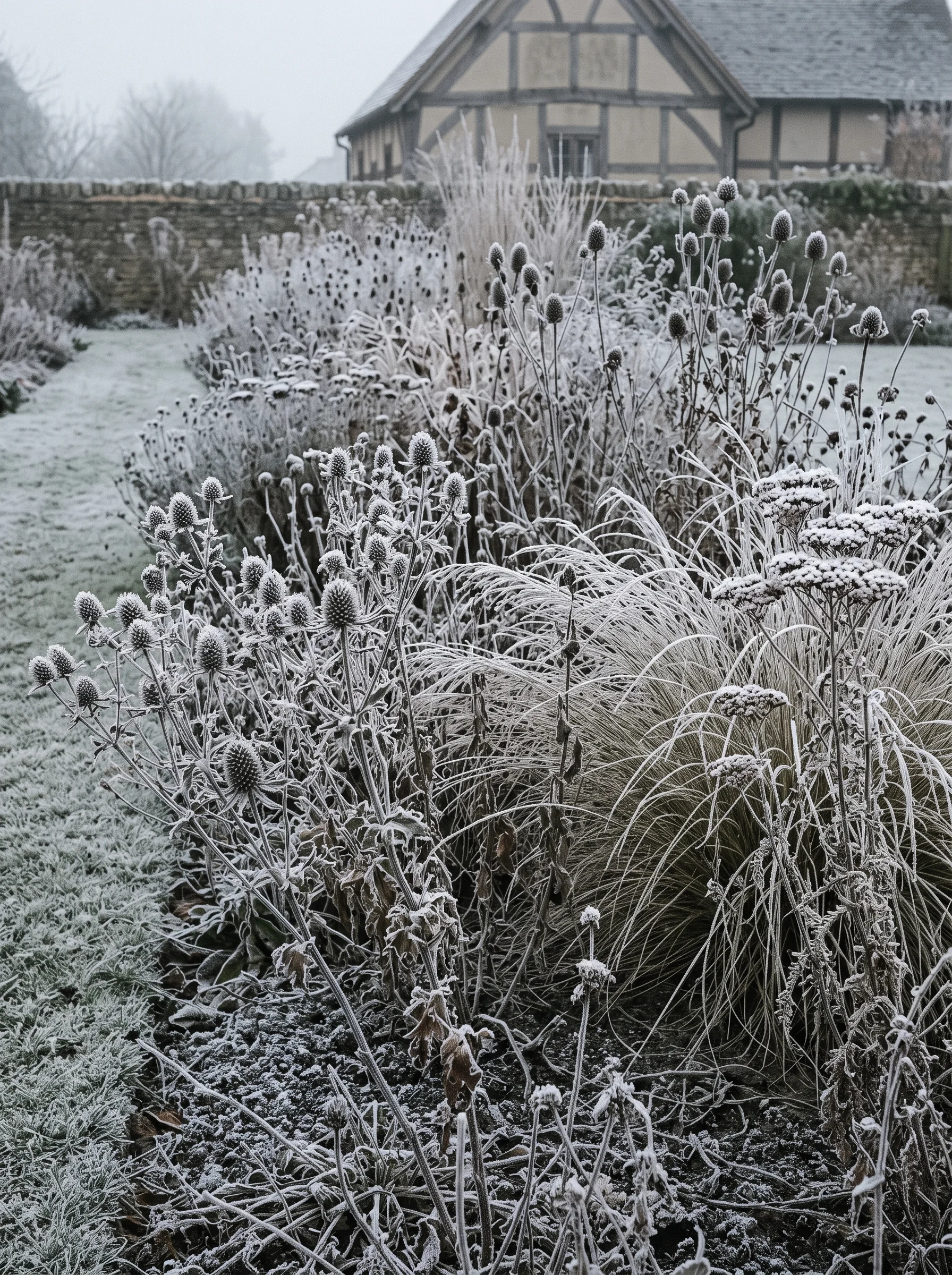
one camera position, six months apart
First, the thinking
Planted for the fifth summer, not the day we drive away.
Ash & Alder is a garden design and maintenance business in Ludlow. We have been making and keeping cottage and country borders on south Shropshire’s wet clay since 2013, and the year, as we keep it, runs like this: soil in March, cut grass in July, bare stems in November. None of those is the garden at its best. All of them are the garden.
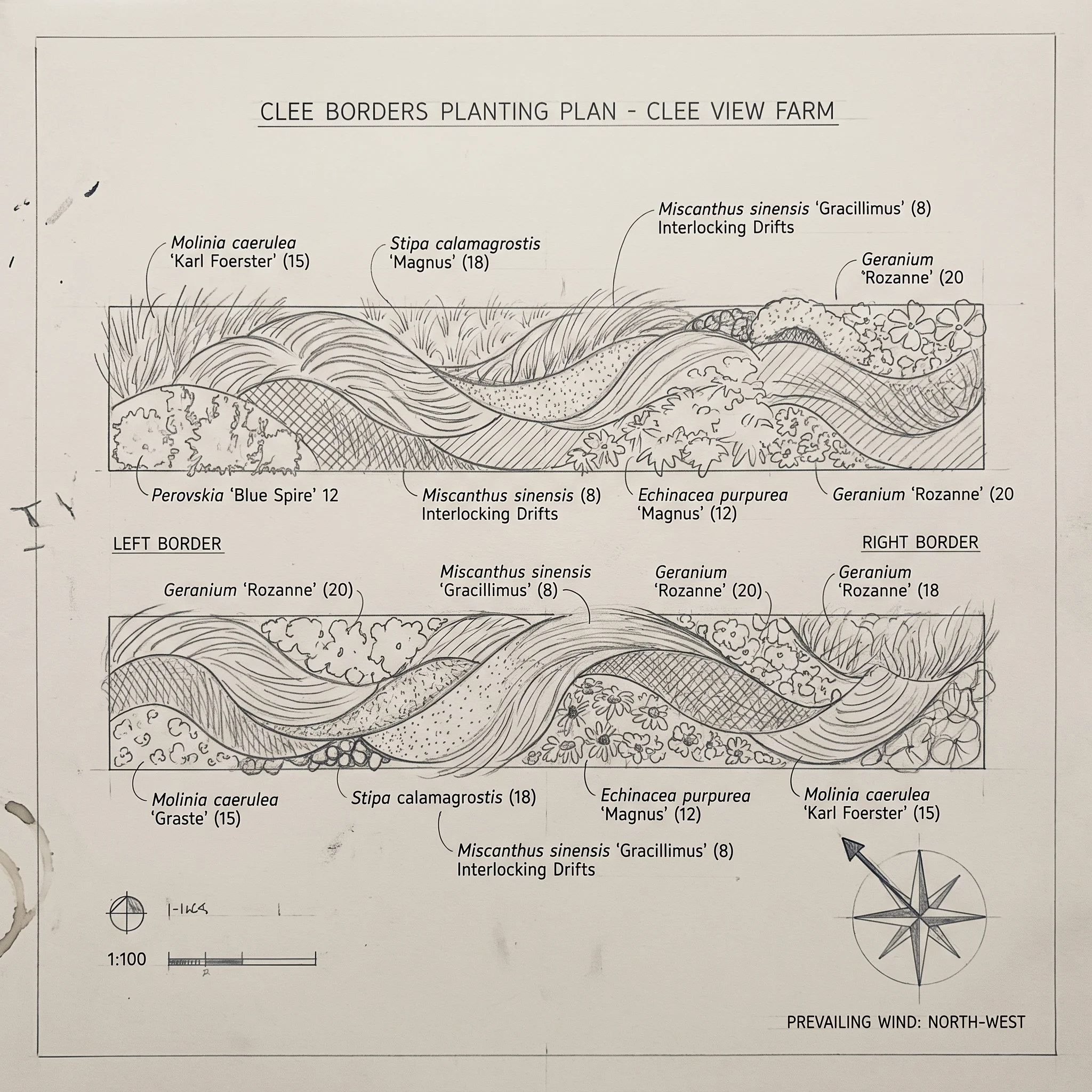
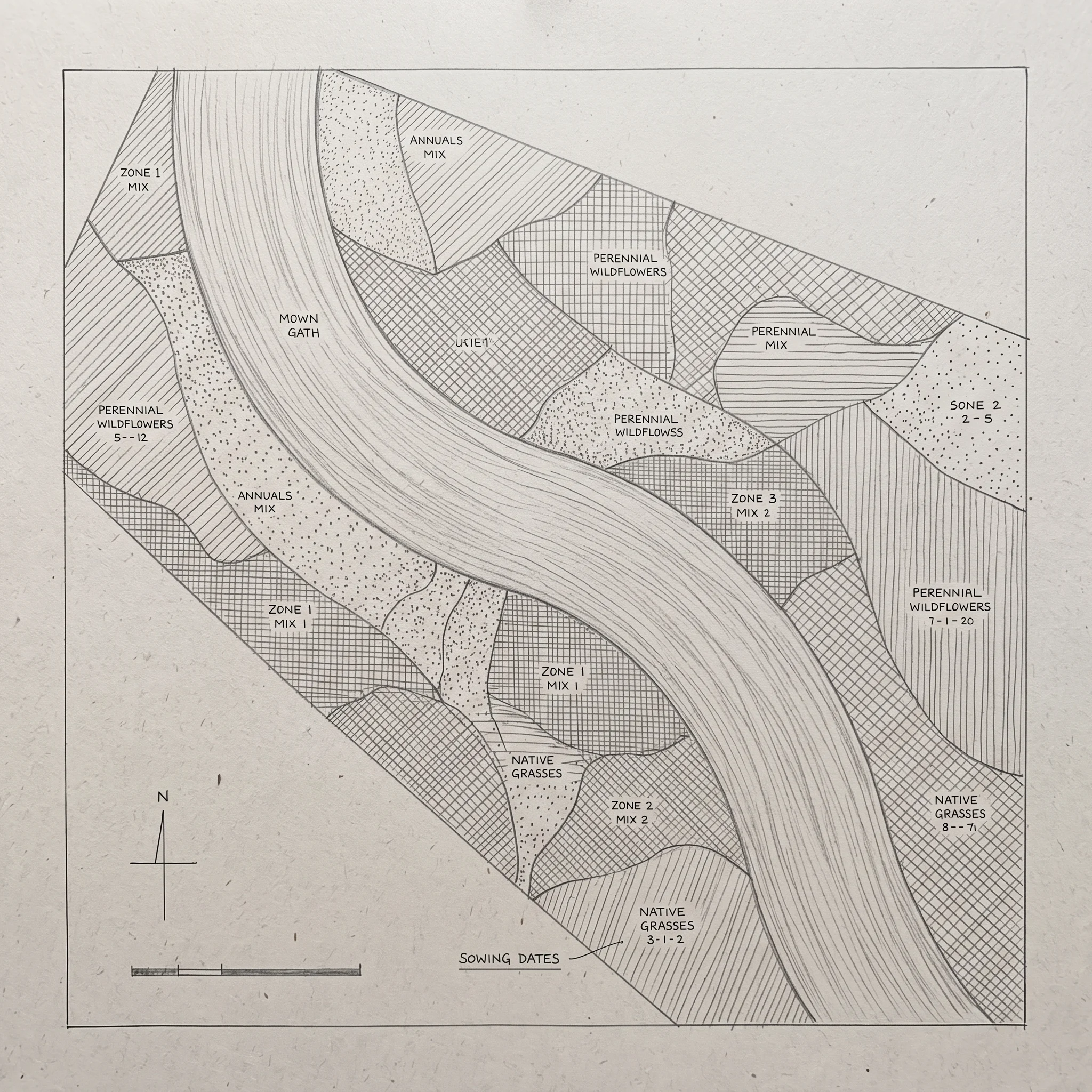
A border designed for the day it’s finished is a bunch of flowers with the stems buried. We draw ours for the fifth summer — every plant set at the spacing it will need once it has earned it. That means honest gaps in the first year, a bed that knits a little tighter every season after, and a plan you can hold: pencil, to scale, drawn before anything is dug.
Wet clay is not a problem to be engineered away; it is the ground we garden. Planting for wet clay soil in Shropshire suits roses and geraniums, asters and long grass, and it will sulk under anything that wants Mediterranean drainage — knowing the difference is most of the job. The rest is turning up, through the flowering weeks and the frozen ones alike. Which is why, on this page, January is photographed as often as July.
The border, taken apart
What a cottage border actually is.
cottage and country border planting, as we practise it around Ludlow
‘Cottage border’ has softened into a word for prettiness. It is actually a method, and an old one. Structure first — roses, box, a few shrubs that hold the winter. Then perennials in repeated groups, so the eye is led down the bed rather than stopped by it. Then a succession running underneath, handing the border along from tulips in April to asters in October. The drift that looks like a happy accident was drawn in pencil, two winters before it flowered.
Read one border from the path, and the method shows:
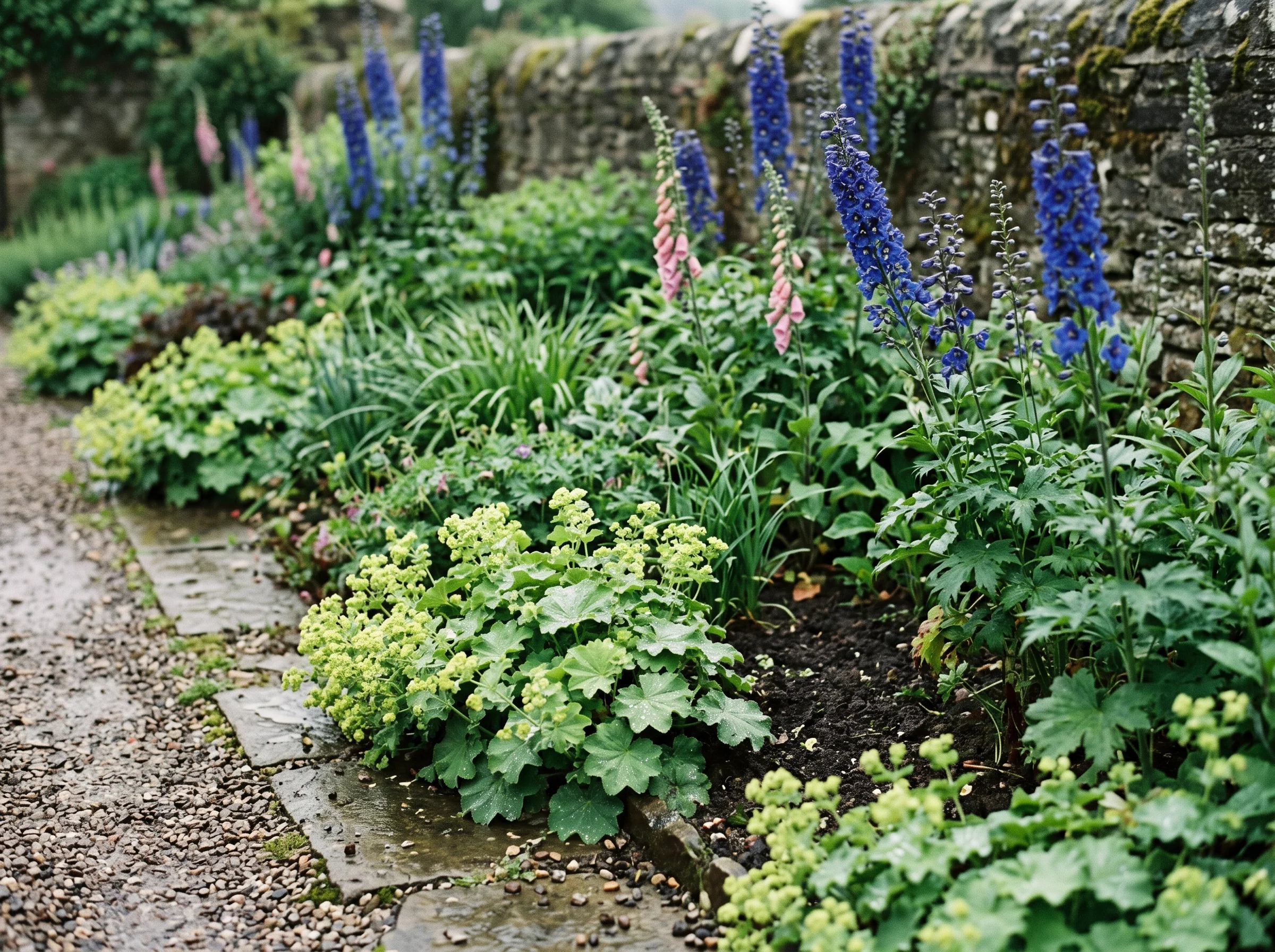
- Rosa ‘Gertrude Jekyll’ — the spine of the bed; scent at nose height by the third June.
- Delphinium elatum — spires at the back, staked by mid-May or not at all.
- Geranium ‘Rozanne’ — flowers June to frost; knits the gaps the plan left on purpose.
- Alchemilla mollis — spills the path edge; sheared after its first flush, it does the whole thing twice.
- Tulipa ‘Ballerina’, gone by May — Symphyotrichum ‘Little Carlow’ takes the same ground by September.
- Miscanthus sinensis ‘Morning Light’ — stands all winter; the January photographs depend on it.
- Bare soil between the crowns — spacing drawn for year five, not for the day we leave.
Structure, repetition, succession, patience. The rest is weather.
The work, in two seasons
Gardens in time.
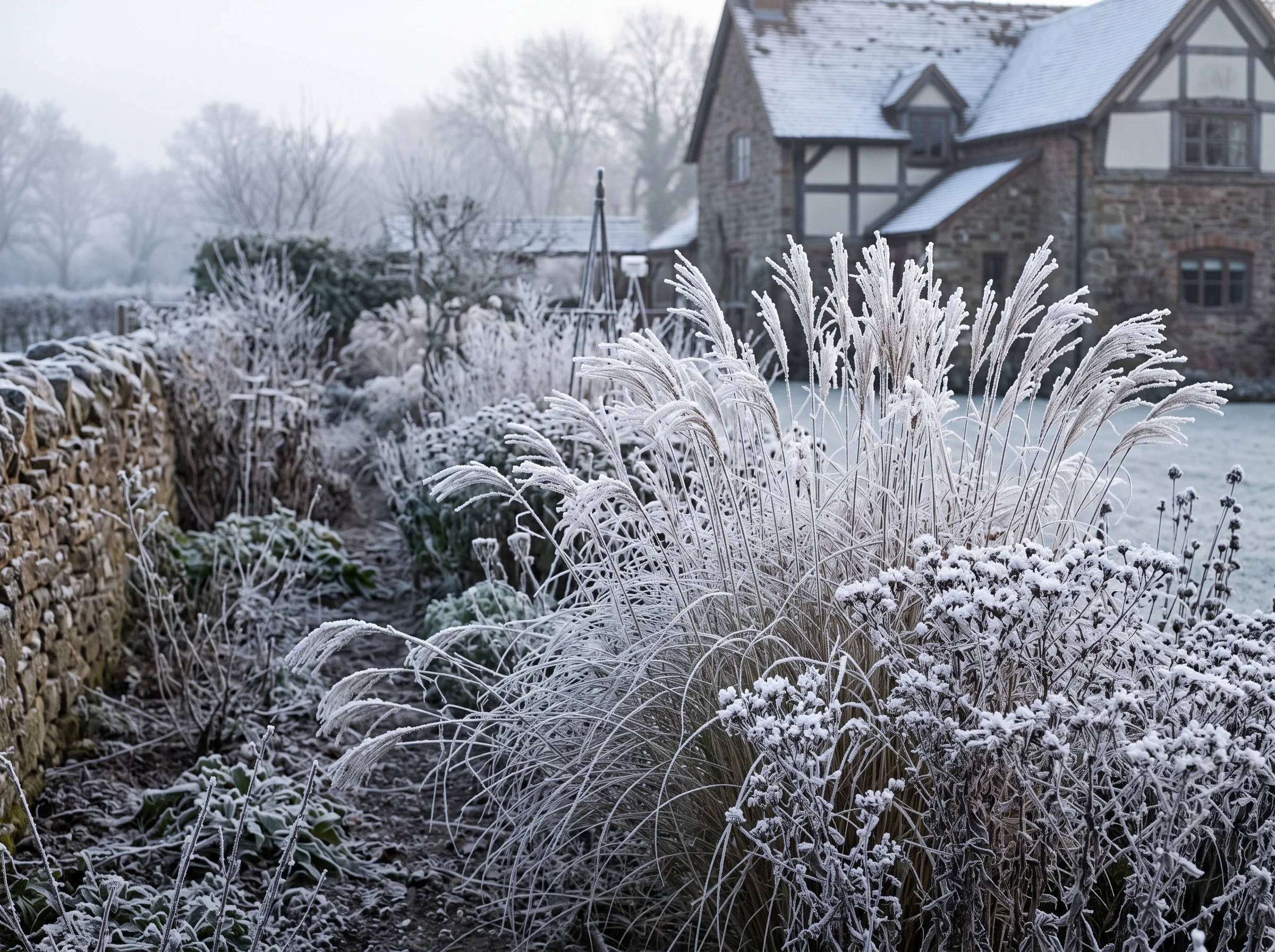
Three gardens in and around Ludlow, each photographed twice from the same spot — high summer and midwinter. We show both because both are designed. A border that peaks twice a year is a different plant list, a different spacing, a different discipline from one that peaks once. Half the photographs here are frost and stems, deliberately.
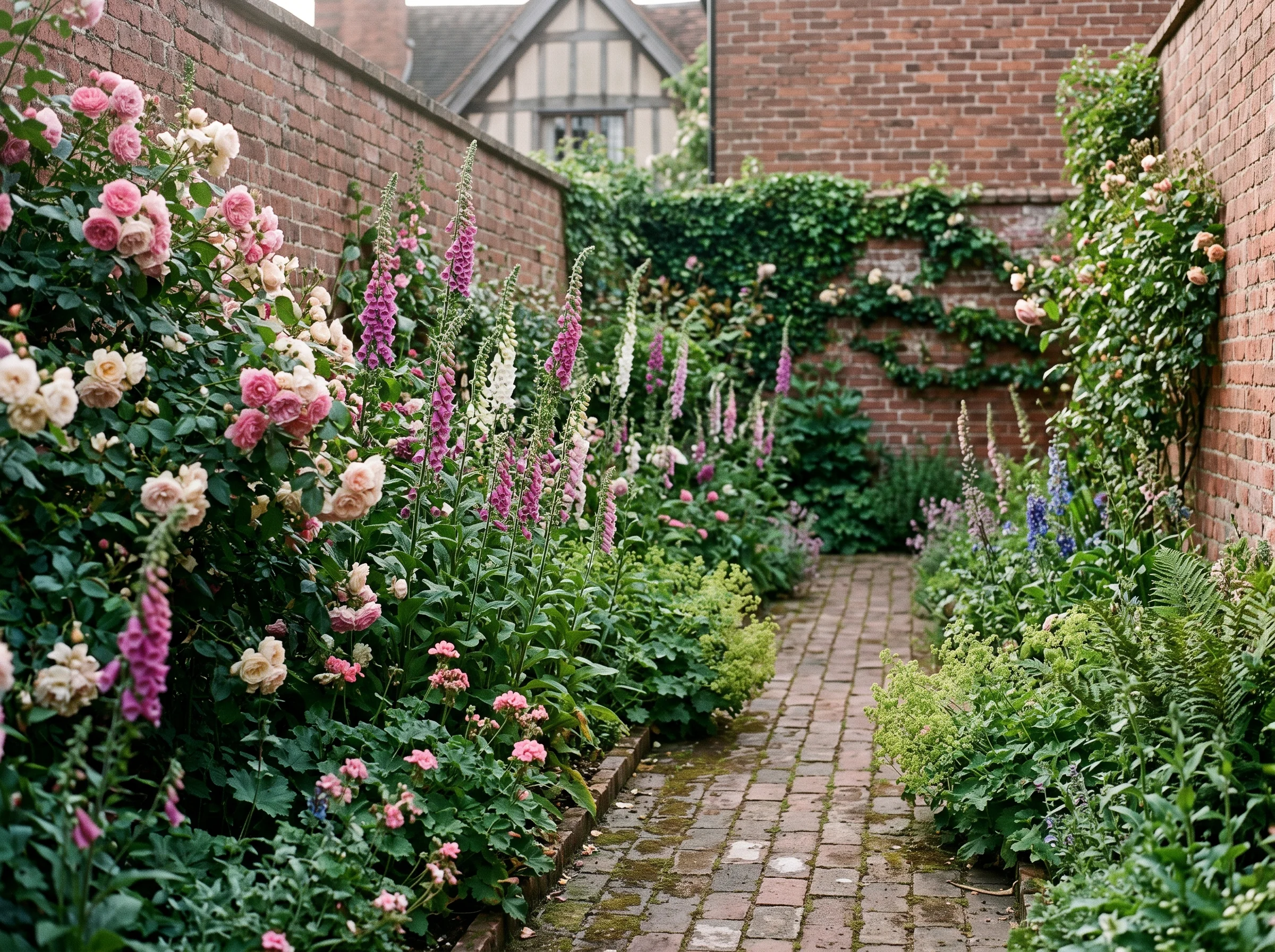
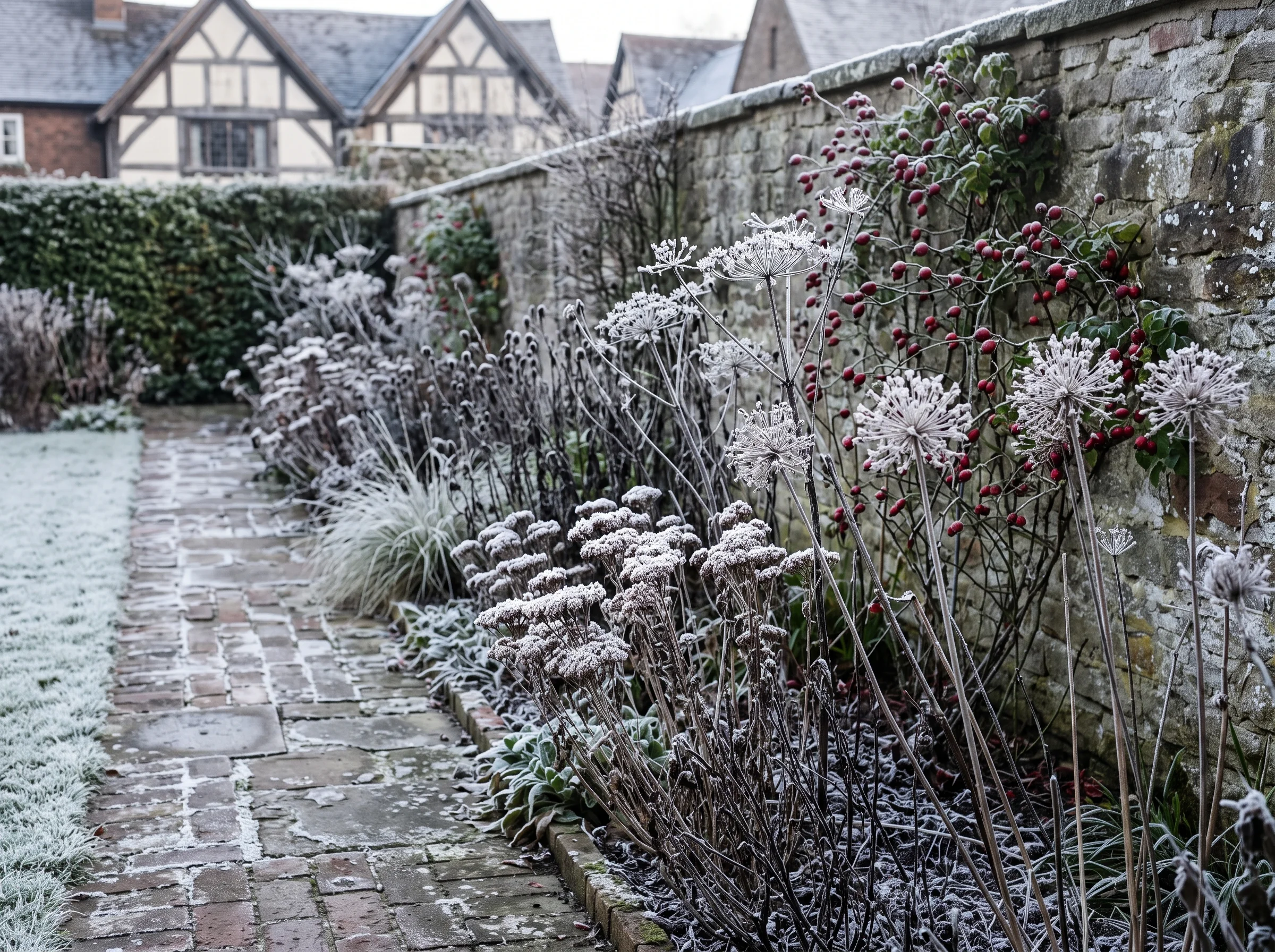
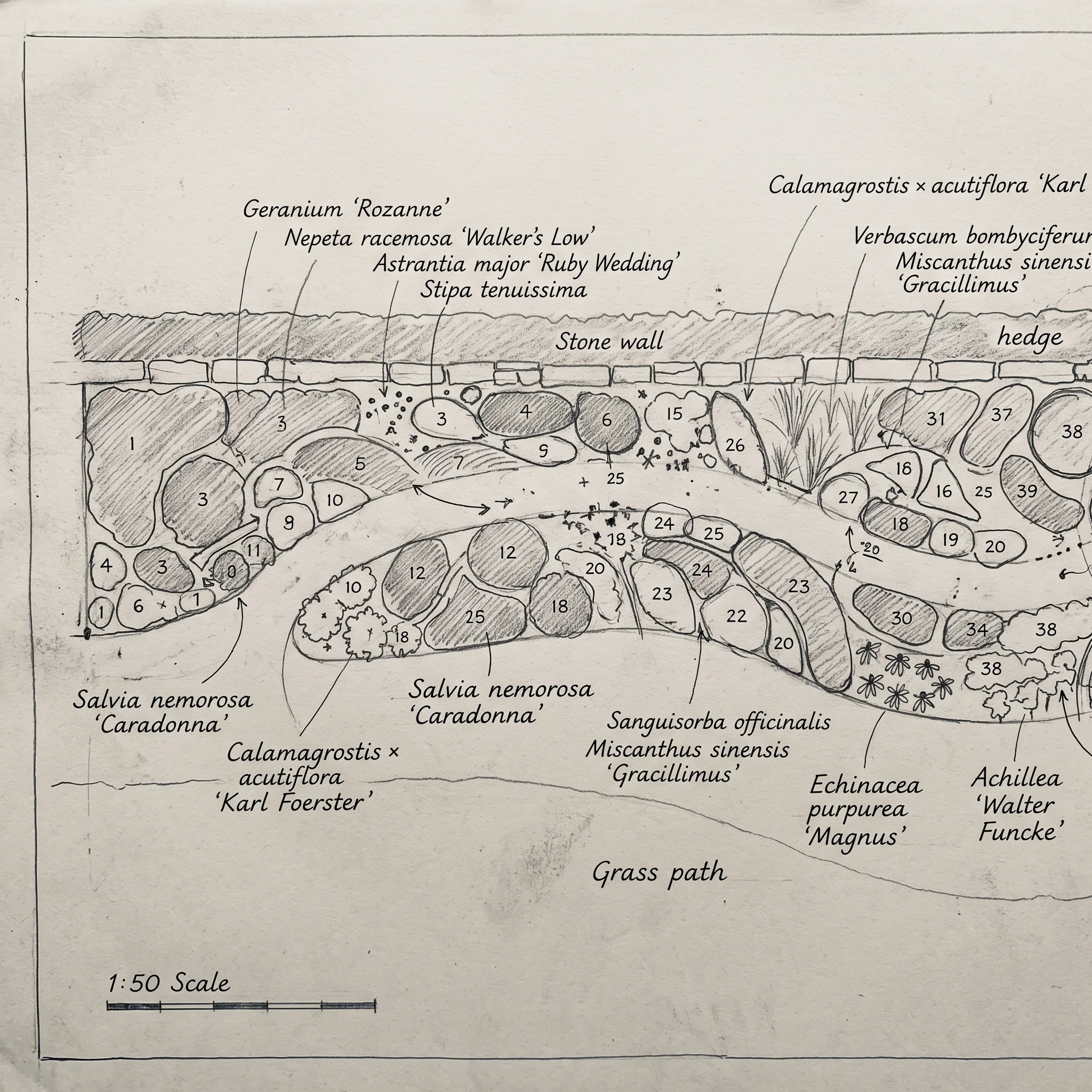
A walled garden in the middle of town
Ludlow — heavy clay, half a day’s sun below the wall. Planted so the fifth July carries roses and foxgloves the length of the path, and the fifth January still gives the kitchen window something worth looking at.
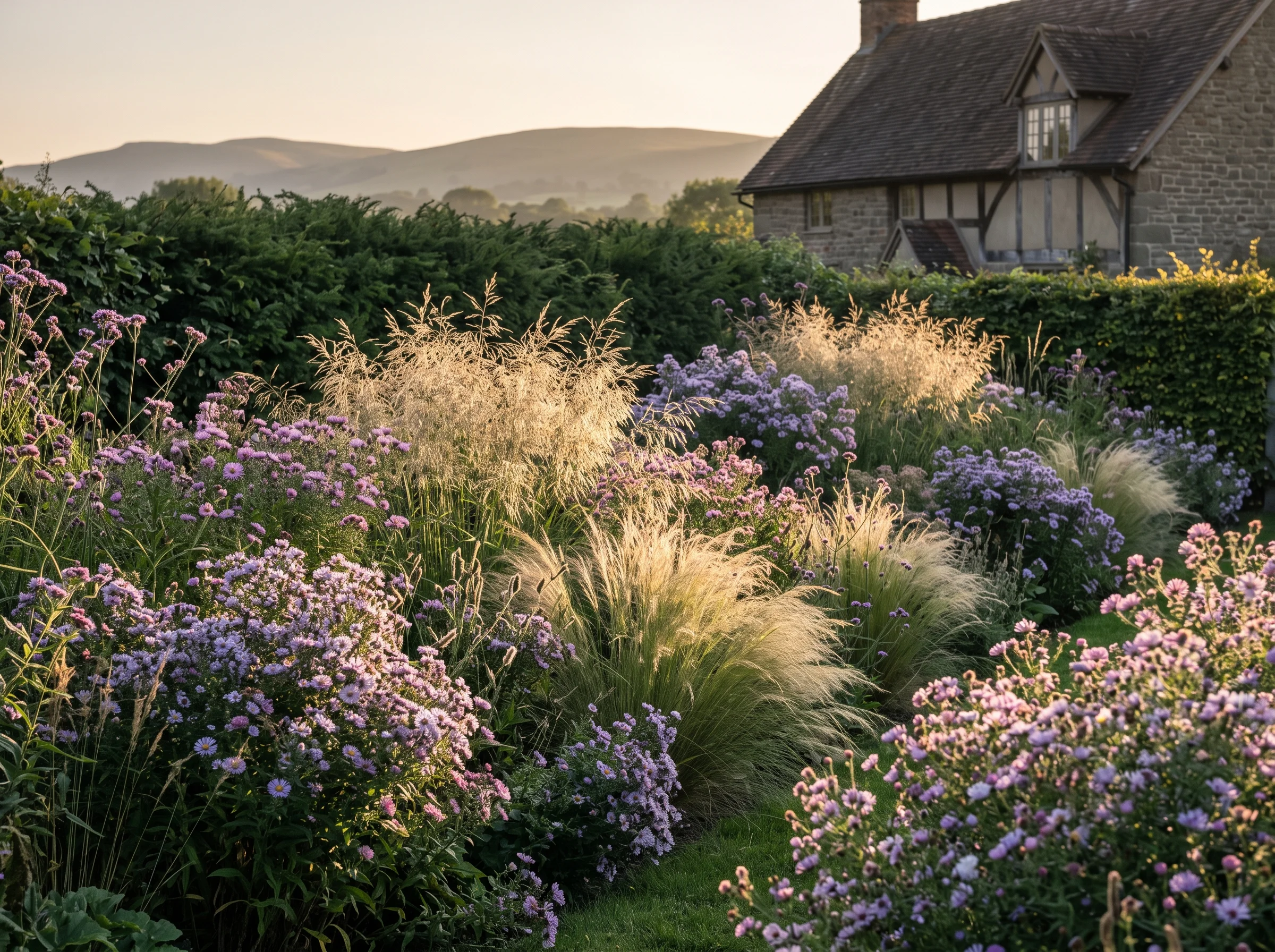
Farm borders under Titterstone Clee
Exposed and wind-worried, the wettest clay we work. Grasses and asters do the lifting; the whole scheme was drawn around two mornings — the August haze and the first hoar frost.
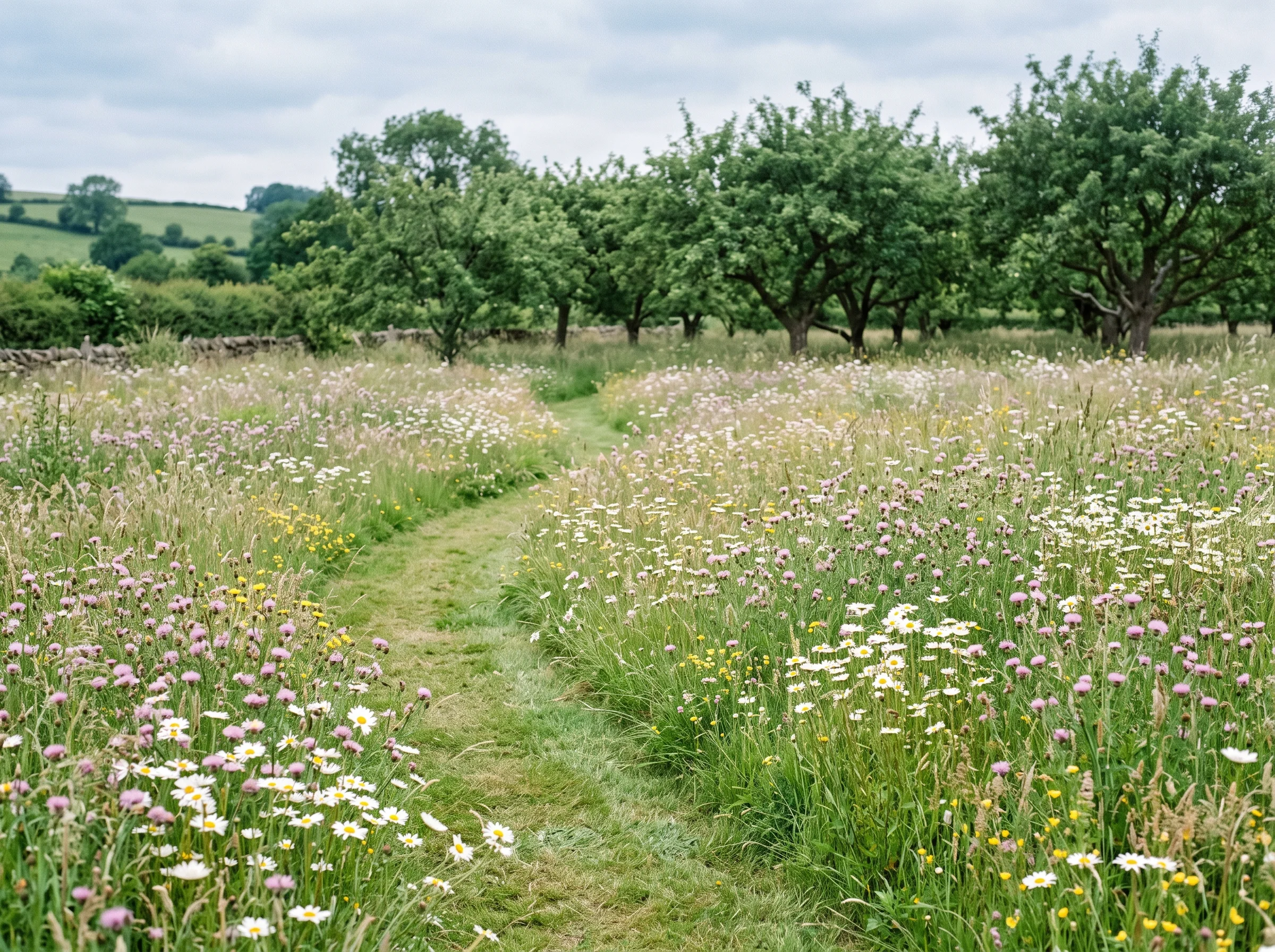
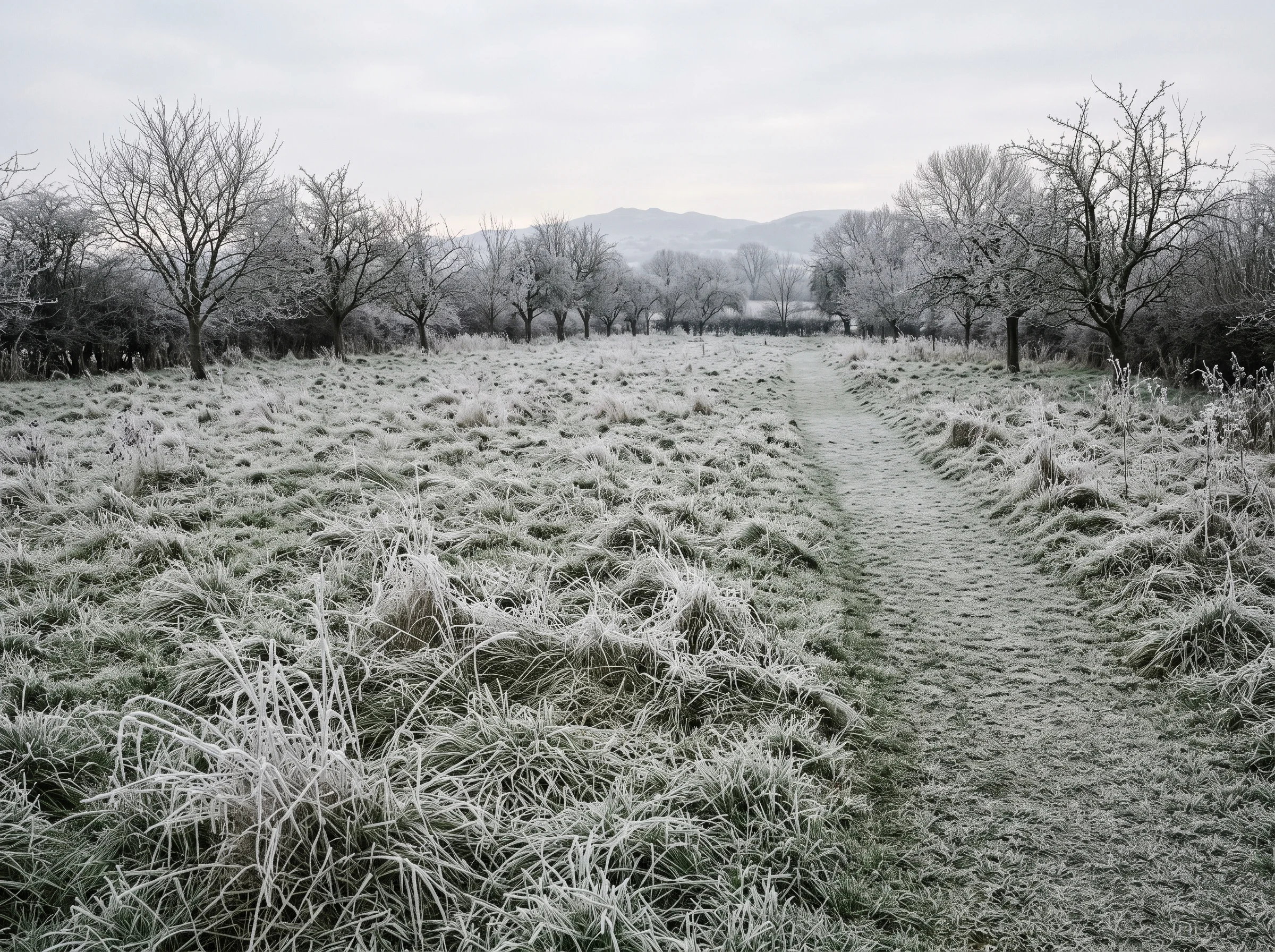
An orchard-edge meadow in the Corvedale
Wildflower meadow planting over clay: yellow rattle first to thin the grass, then oxeye, knapweed and scabious. One cut in late August, paths mown all year — by the fifth June it largely runs itself.
Maintenance, month by month
The year’s work.
A border is designed once and kept ever after. Most of our week is seasonal garden maintenance around Ludlow and south Shropshire — the same hands in the same gardens, month after month. This is what the year looks like from your side of the gate:
-
March
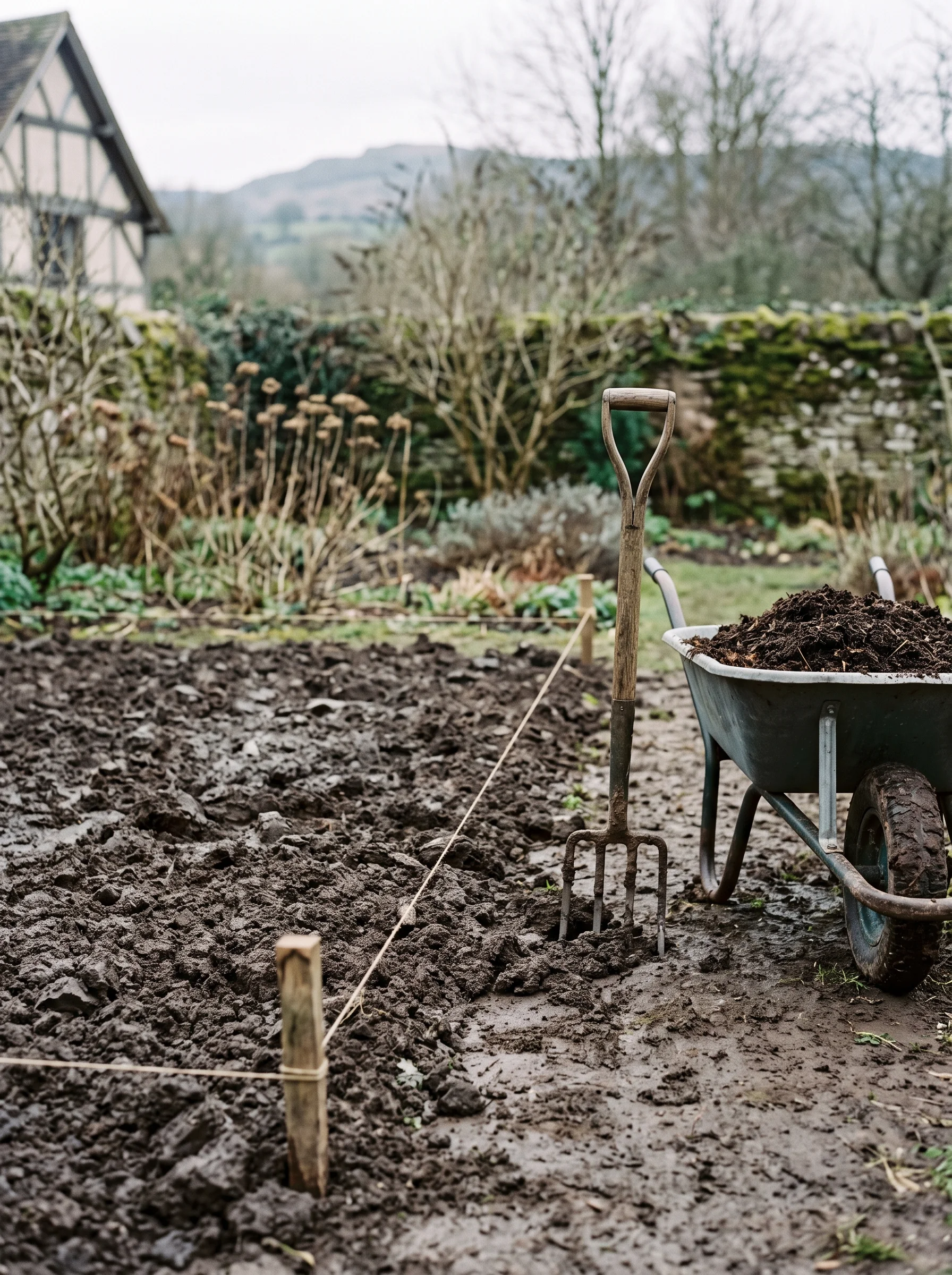
Beds turned and mulched while the ground still bites. String lines out, and the plan comes too — corrected in pencil wherever the garden has disagreed with it.
-
May
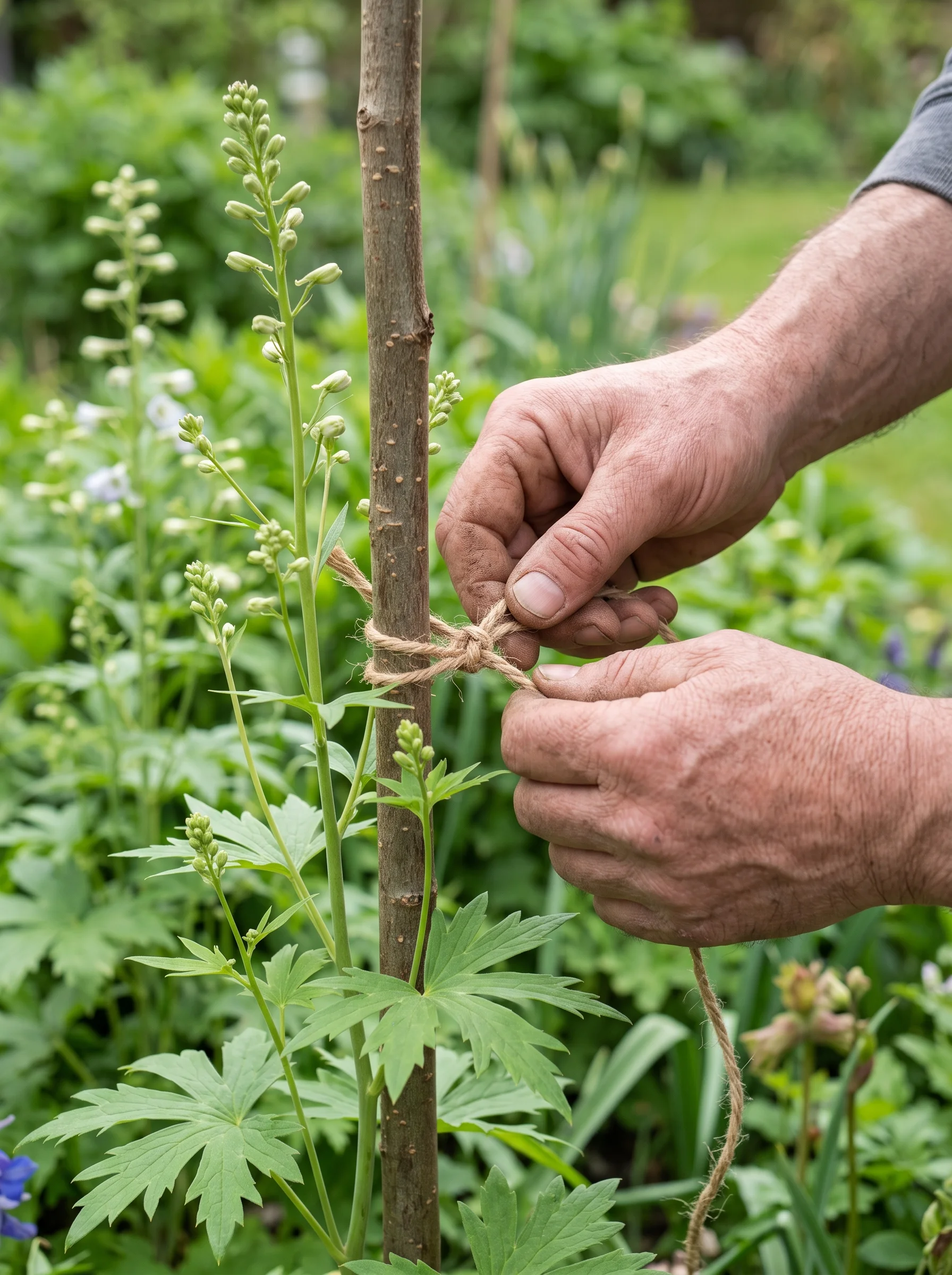
Staking before it’s needed: hazel and twine now spare the June flop. First true edges of the year, and the tulips assessed for autumn’s order.
-
July

Edges weekly, deadheading as we go, the second flush coaxed on. Cut grass — the smell the whole trade runs on.
-
September
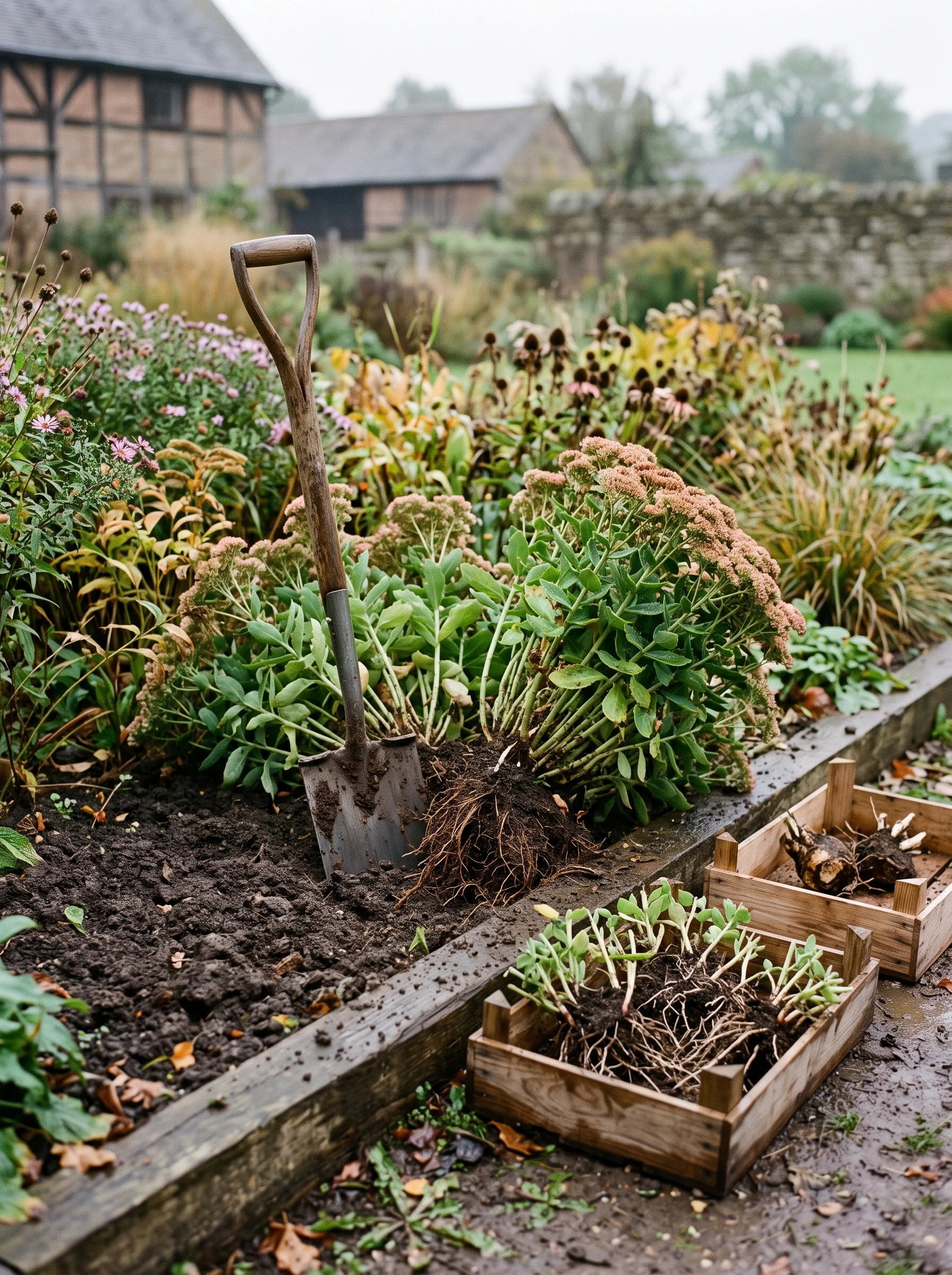
Division and honesty: most border renovation is subtraction. What summer proved wrong is moved, not defended. Hedges cut now the nests are empty, and bare-root native hedging booked for the winter.
-
November
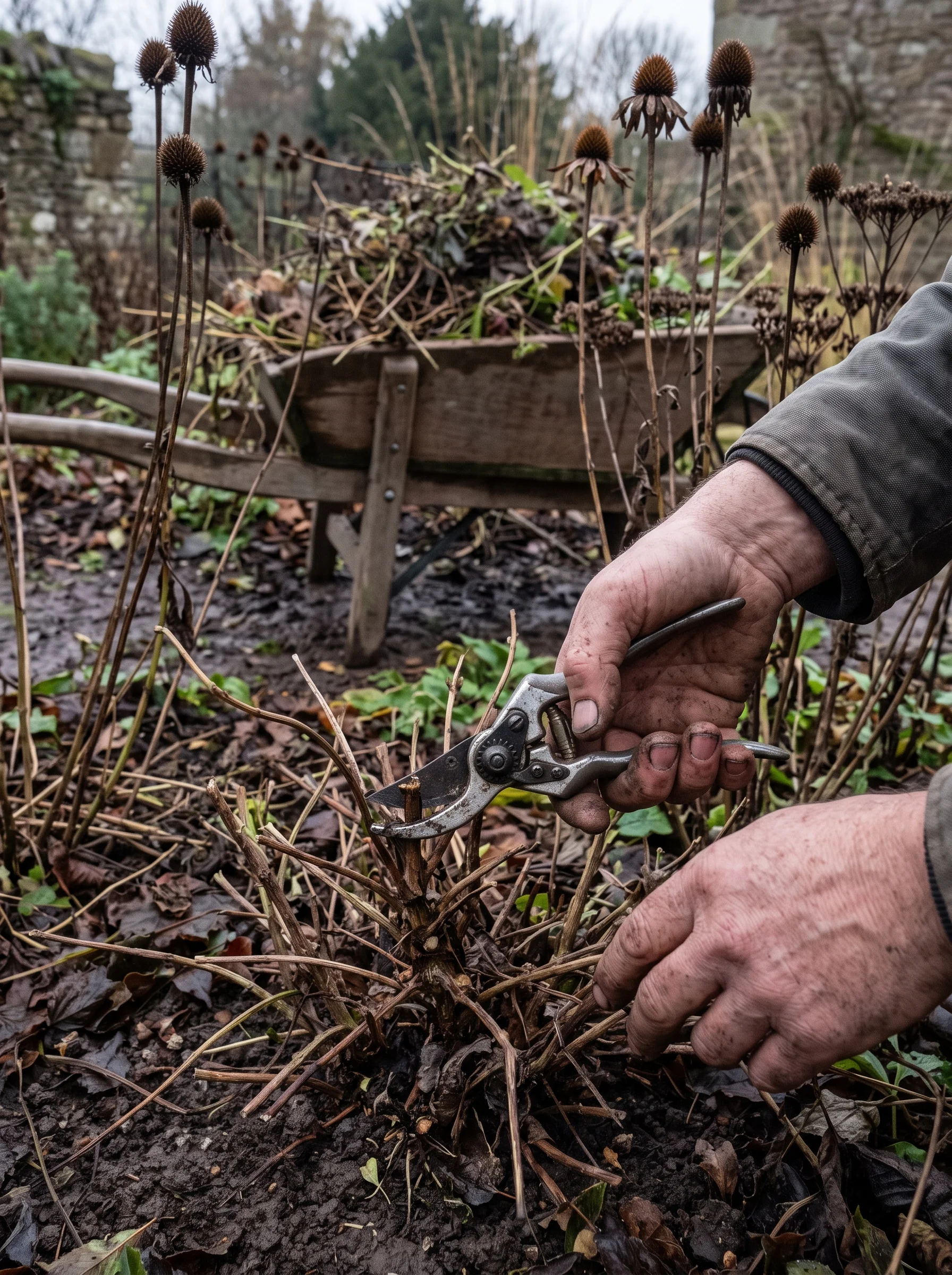
The restraint. Seedheads stand until February — for the frost, for the finches, for the January photographs. We cart leaves and turn compost, and cut nothing that still holds its shape.
Come February the standing skeletons come down in a fortnight, and March starts the whole year again.
Ninety-six opinions, quietly
Marginalia.
what people keep writing about us, condensed to pencil notes — the way we’d annotate a plan
that the border came good in its third summer, to the month the plan said it would
that we turn up in the wet weeks, when the clay is at its worst and the work least photogenic
Latin offered, plain English used
that we said one bed didn’t need us at all, and meant it
the plan, still pinned up in a kitchen three years on
seedheads left standing until February, and the garden better for it
We’d rather you judged the January photographs.
A first conversation
Begin with a plan.
Every garden we make starts the same way: we come round, walk the ground with you, and talk about what the garden does now and what you’d like it to be doing in five years. Then we draw the plan — in pencil, to scale — before anything is dug. Tell us a little below and we’ll arrange a visit.
— begun, as everything here begins, with a plan.